































- Authorized Warranty
- Flexible payment options
- Delivery & installation

Wheel Balancing: A Small Step for a Safe Journey and Comfortable Drive

When it comes to car maintenance, drivers often focus on oil changes, brake checks, and tire pressure. However, one of the most critical routine maintenance tasks that is frequently overlooked is Wheel Balancing. This simple process has a massive impact on the quality of your drive, your safety, and even the lifespan of your tires.
What is "Wheel Balancing"?
Wheel balancing is a precise technical process aimed at distributing the mass weight evenly across the entire wheel assembly (the tire and the rim combined).
Even with the best manufacturing techniques, it is impossible for the weight of a tire and rim to be distributed 100% perfectly. There are always slight differences, known as "Heavy Spots" and "Light Spots."
The balancing process simply involves identifying these unbalanced points using a precise electronic machine. Small counterweights (often called "wheel weights") are then added to specific spots on the rim to compensate for this difference, ensuring the wheel spins completely smoothly without any vibration.
Why is Wheel Balancing Important?
The primary goal of balancing is to guarantee that weight is distributed perfectly evenly around the vehicle's wheel axis. When the weight is uneven—even by just a few grams—high driving speeds turn this minor difference into a significant centrifugal force that causes vibration (shaking).
The importance of balancing lies in three key areas:
- Driving Comfort: It prevents annoying vibrations in the steering wheel or the car body, providing a smooth and comfortable ride.
- Preserving Tires: It prevents uneven and rapid tire wear, extending their lifespan and saving you money.
- Protecting Car Parts: Continuous vibration places extra stress on suspension components (such as shock absorbers) and the steering system, which can lead to premature failure.
How is the Process Done?
Balancing is not a complex process, but it requires precision and specialized equipment.
- Removing the Wheel: The technician removes the wheel assembly (tire and rim) from the car.
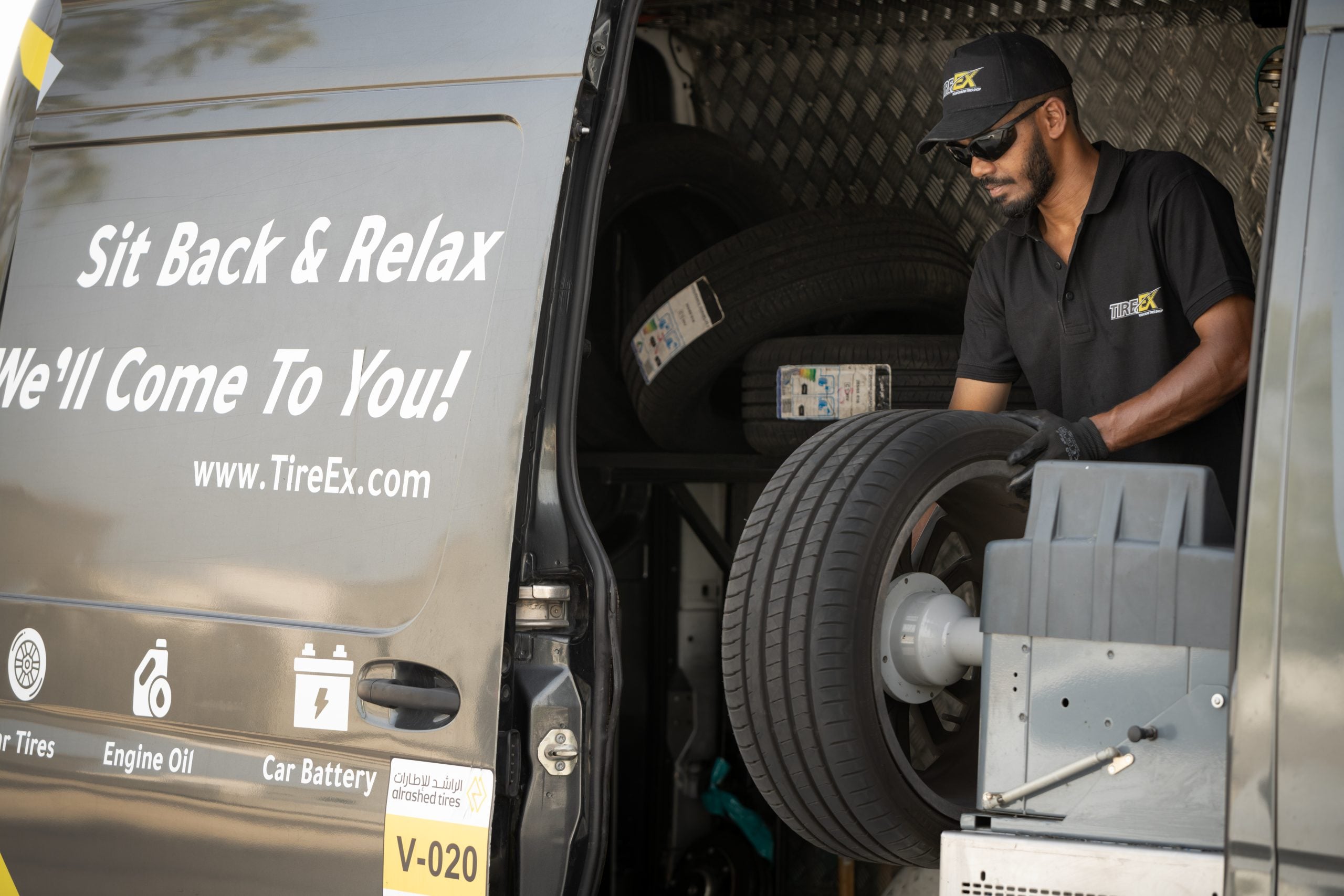
- Mounting: The wheel is mounted onto a specialized electronic machine called a Wheel Balancer.
- Spinning and Measuring: The machine spins the wheel at high speeds to simulate driving on the road. Precision sensors measure any imbalance in weight distribution.
- Identifying the Spot: The machine’s digital screen shows the technician exactly where balancing is needed and the precise amount of weight required.
- Adding Weights: The technician installs small weights (usually made of lead or zinc). These are either "clipped" onto the rim flange or "stuck" on (for modern aluminum rims). These weights counterbalance the heavy spots, eliminating vibration.
When Should You Balance Your Tires?
There are clear signs and specific times when a wheel balancing check is required:
- When you feel vibration: The most common sign is a "shimmy" or shake in the steering wheel, typically at speeds between 80 and 100 km/h. If the vibration is felt in the seats or the floorboard, the imbalance may be in the rear tires.
- When installing new tires: This is mandatory. A new tire should never be installed without being balanced.
- After repairing a puncture: Dismounting and remounting the tire to fix a flat changes the weight distribution, requiring a re-balance.
- After tire rotation: When swapping tire positions (e.g., moving front tires to the back), balancing is recommended to ensure stability in their new positions.
- As periodic maintenance: It is recommended to check balancing every 10,000 to 15,000 kilometers, or once a year.
- After accidents or strong impacts: Hitting a deep pothole or a curb with force can knock off old wheel weights or cause a misalignment that requires re-balancing.
Impact on Driving and Safety
Neglecting wheel balancing has consequences that go beyond mere annoyance:
- Reduced Safety: Unbalanced tires do not maintain constant, full contact with the road surface. This reduces stability (traction), especially during cornering or emergency braking.
- Driver Fatigue: Constant vibration in the steering wheel keeps the driver in a state of physical tension, leading to rapid fatigue on long trips.
- Increased Fuel Consumption: Vibration means the engine must exert extra effort (inefficient rolling resistance) to push the car, leading to a slight but noticeable increase in fuel consumption over the long term.
- High Repair Costs: As mentioned, constant stress on the suspension system means you may end up paying for expensive replacement parts later—costs that could have been avoided with a simple balancing service.
How Does TireEX Help You?
TireEX, as one of the leading tire service companies in the UAE, understands the importance of this precise step for customer safety, especially given the hot climate and long distances that characterize the region's roads.
- Latest Technology: TireEX centers use the latest electronic (computerized) balancing machines that ensure absolute precision in measuring and distributing weight, known as "Dynamic Balancing."
- Expert Technicians: Technicians at TireEX are trained to handle all types of rims and tires, including sensitive sports rims that require hidden adhesive weights.
- Comprehensive Service: When you buy new tires from TireEX, the balancing and installation service is a fundamental part of the package, ensuring you leave the center with a vehicle ready for the road with the highest safety standards.
- Accessibility and Ease: Through its network of centers spread across major cities, TireEX makes the process of checking and balancing your tires quick and easy as part of your routine maintenance.
Search for the nearest tire installation center via our Branches page.
Conclusion
Never underestimate the vibrations you feel while driving. Wheel balancing is not a luxury; it is a necessity for maintaining your safety, your driving comfort, and protecting your investment in your vehicle's tires. Be sure to have them checked regularly at trusted service centers like TireEX to ensure a safe journey, every time.