






























- Authorized Warranty
- Flexible payment options
- Delivery & installation
Tire Codes: From Speed and Load to Manufacturing Date

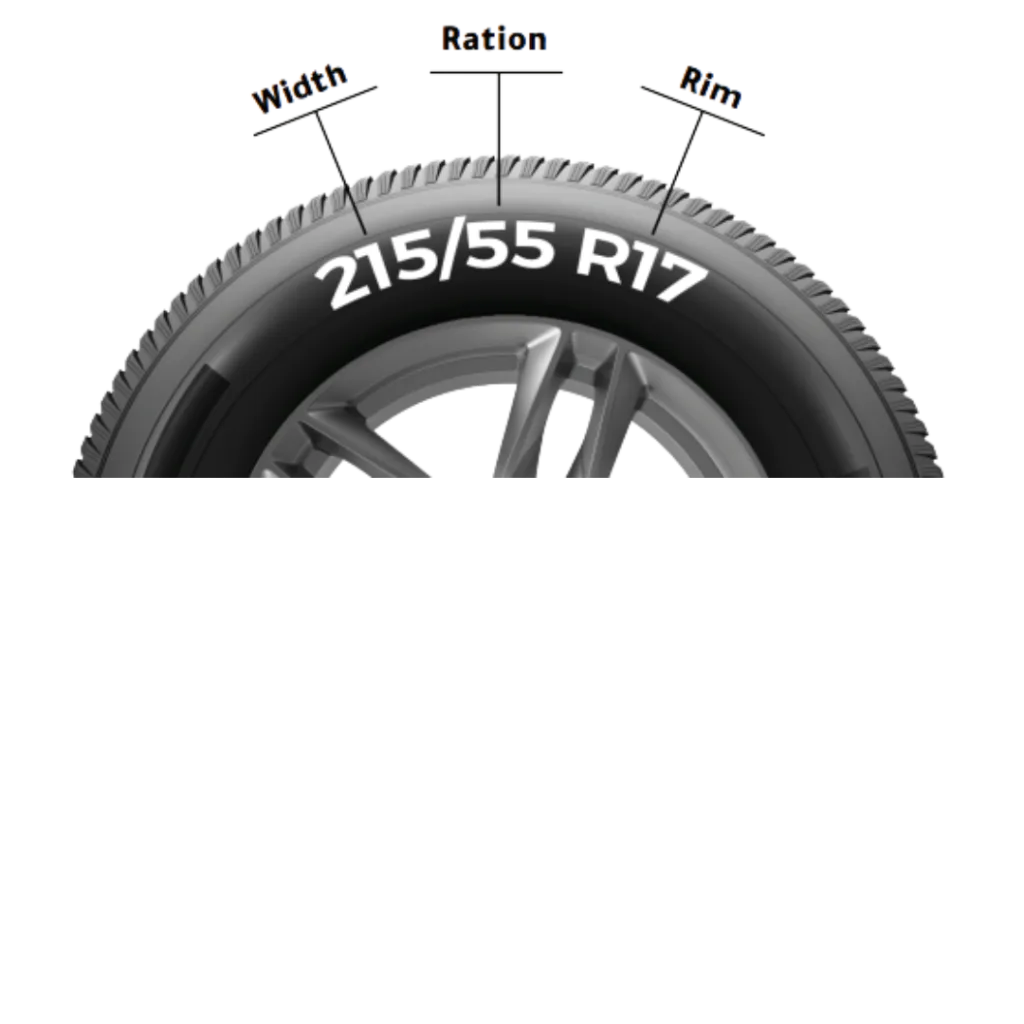
Confident and safe driving begins with understanding your tires. Those codes on the sidewall aren't a mystery, they're a clear guide to everything from tire type and maximum speed to its manufacturing date. In this guide, we’ll explain what each of these codes means, step-by-step.
The Most Important Numbers and Letters: Load Index and Speed Rating
At the end of the tire size information (e.g., 205/55R16 91V), you'll find what's known as the "Service Description." It consists of a number and a letter, which are fundamental to the tire's performance and safety.
- Load Index: This is the number that represents the maximum weight a single tire can carry. For example, a load index of 91 means the tire can support up to 615 kg (1,356 lbs). The golden rule: Never install a tire with a load index lower than what your vehicle's manufacturer recommends.
- Speed Rating: This is the letter that indicates the maximum safe speed the tire is designed to handle. Common ratings include:
- S: 180 km/h (112 mph)
- T: 190 km/h (118 mph)
- H: 210 km/h (130 mph)
- V: 240 km/h (149 mph)
- W: 270 km/h (168 mph)
To ensure your safety, always make sure your new tires match or exceed the specifications recommended by your car's manufacturer.
Letters That Define Tire Type (Before the Size)
- P: For Passenger vehicles.
- LT: For Light Trucks.
- ST: For Special Trailers, designed for stability, not for use on driving axles.
- T: For Temporary use (spare tire).
These letters help you choose the right category of tire for your vehicle's purpose.
Other Equally Important Codes on Your Tire
1. UTQG Quality Grades: Performance and Wear
The Uniform Tire Quality Grading (UTQG) system provides three key ratings:
- Treadwear: A number that indicates the tire's expected tread life. A higher number means a longer lifespan.
- Traction: Rated from highest to lowest (AA, A, B, C), this measures the tire's ability to stop on wet pavement.
- Temperature: Rated A, B, or C, this indicates the tire's resistance to heat.
2. Date of Manufacture (DOT)
Locate the "DOT" code on the tire's sidewall. The final four digits indicate the week and year of production. For instance, (3725) signifies the tire was made during the 37th week of 2025. It is advisable to inspect tires after 5 years and replace them within 10 years of the manufacturing date, even if they appear to be in good condition.
3. Winter and Cold Weather Symbols (M+S and 3PMSF)
When driving in rainy or snowy conditions, check for the M+S (Mud and Snow) symbol. However, for superior winter performance, the three-peak mountain snowflake (3PMSF) symbol is the certified and trusted standard for modern winter and all-weather tires.
A Practical Example: Reading the Codes
Let's read this tire size together: P 205/55R16 91V
- P: A passenger car tire.
- 205: The width of the tire in millimeters.
- 55: The aspect ratio—the height of the sidewall is 55% of the tire's width.
- R: Stands for Radial construction, the most common type.
- 16: The diameter of the wheel (rim) in inches.
- 91: The load index (can carry up to 615 kg).
- V: The speed rating (safe up to 240 km/h).
Regular Maintenance: Extend Your Tires' Life and Stay Safe
Understanding the codes is half the battle; the other half is maintenance to protect your investment and your safety.
1. Checking Tread Depth
Tread depth is vital for maintaining grip in wet conditions, as the grooves channel water away to prevent hydroplaning. You can use the "coin test" to verify this: if a large part of the coin remains visible, the tread is likely worn. Although the legal minimum is 1.6 mm (2/32"), for optimal safety on wet roads, it is best to consider replacing tires when the depth falls below 3 mm.
2. Rotation and Alignment
To ensure even wear and longer tire life, rotate them every 10,000 km (6,000 miles), or as your vehicle's manufacturer recommends. An alignment keeps your wheels pointing correctly. If your car pulls to one side or you see uneven tire wear, it's a clear sign you need an alignment.
Quick Tips Before You Buy
- Match the Specs: Always stick to the load index and speed rating recommended in your owner's manual or on the sticker inside the driver's door jamb.
- Check Air Pressure: Check monthly when the tires are cold. Proper pressure preserves the tire, saves fuel, and improves handling.
- Choose the Right Type: Don't use trailer tires (ST) or temporary spares (T) for daily driving.
Conclusion: Choose Your Tires with Confidence and Knowledge
Understanding these codes, paired with regular maintenance, turns the tire-buying process from a confusing chore into a confident decision that improves both safety and vehicle performance. You are now equipped to select and care for the ideal tires for your car, ensuring you can drive with peace of mind on every journey.